coderqh
Tomavo
$24Flutter Food Delivery App UI Kit
4 apps in this collection, each with full Flutter source.
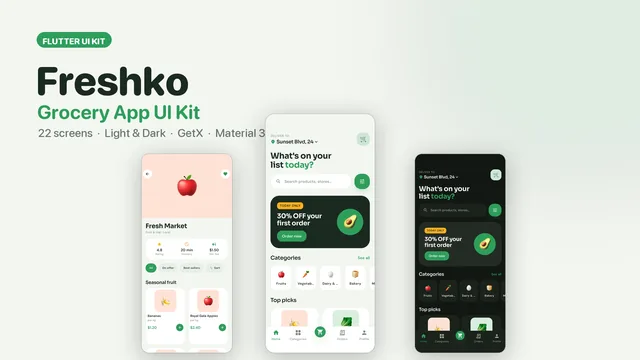
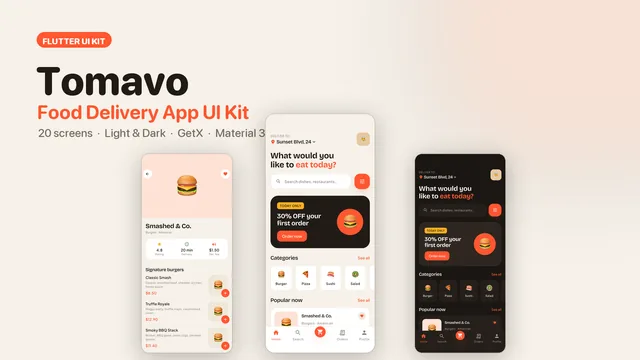
Food apps split into two jobs: getting food to someone's door, and helping them cook or keep track of what they eat. Tomavo is the customer side of a delivery or takeaway app. A dish is built from option groups that reprice with each tap, the cart holds one restaurant at a time, and after checkout the order moves along a tracking timeline, with a one-tap reorder waiting in history. Freshko does the same for a grocery shop, where bananas sell by weight, avocados by the piece and spinach by the pack, and shoppers choose a delivery day and time window before they pay.
Neither ships with a server. Orders, products and addresses come from mock services that return Futures, so your own API slots in behind the screens without anyone touching the views.
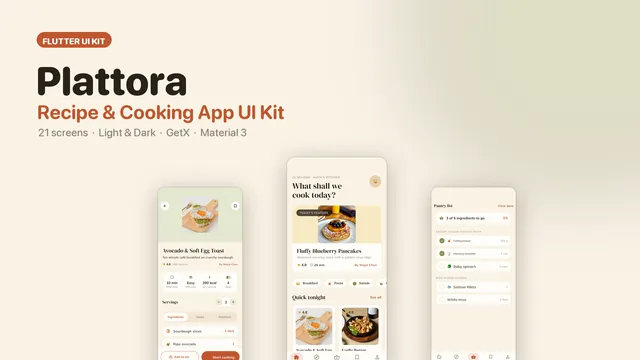
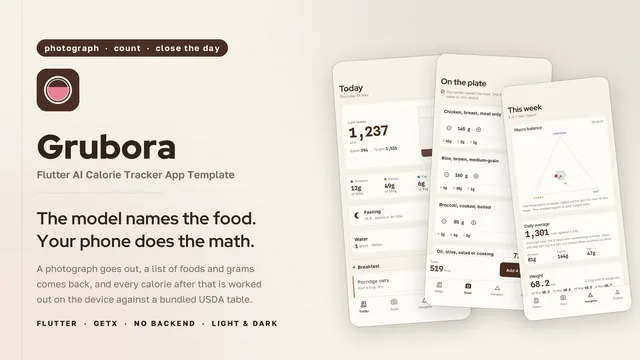
Plattora is for recipe and food content apps. A servings stepper rewrites every quantity, a full-screen cook mode shows one step per page with a countdown on timed steps, and any recipe can fill a shopping list grouped by dish. Grubora logs meals from a photo: an AI model names the foods and estimates portions, then the app looks each one up in a bundled reference table and does the calorie math on the phone, leaving every row editable. Open the live preview of the closest one first, then buy the source.
Something else? Email support@coderqh.com; the author answers.
Freshko. Every product carries its own unit, so an item can be priced per kilo, per piece or per pack, and the product page adjusts the price as the shopper picks a pack size or ripeness. At checkout the shopper chooses a delivery day and time window, and after payment the order appears on a tracking timeline with reorder from history.
No. The model names the foods on the plate and estimates portions; calories and macros are then calculated on the device from a bundled reference food table. Foods it cannot match are flagged with a search prompt instead of being swapped for a lookalike, and grams stay editable on every row. A demo mode runs the whole flow before any key is added.
Yes. In Tomavo each dish has single-choice and multi-choice option groups, and the price updates as the customer taps. Identical items merge in the cart, a guard keeps each cart to one restaurant, and checkout brings an address picker, payment methods and a working demo coupon. Saved addresses can be added, edited, deleted or set as the default.
No. Tomavo, Freshko and Plattora run on bundled demo data through mock services that return Futures, so you replace those service methods with calls to your own API and the screens stay as they are. Grubora talks to an AI provider with a key you or your users supply, and all of its arithmetic happens on the phone.